
Syria Accelerates Bad Loan Settlement as Dollar and Euro Rates Remain Under Watch
Finance Minister Mohammad Yusr Barniyeh directed the committee handling European Investment Bank-related bad loans to accelerate its work.
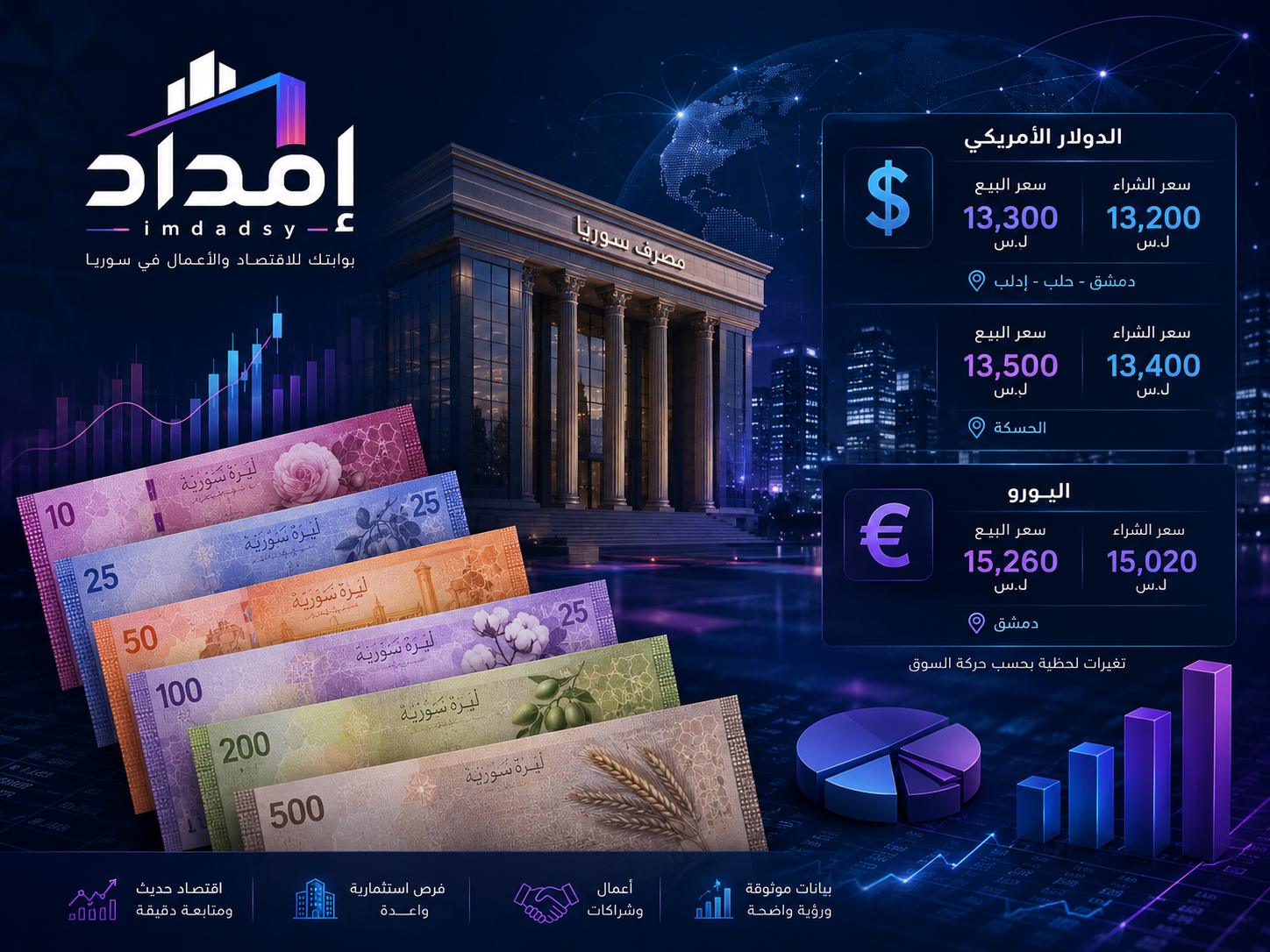
Syria's financial and banking sector is witnessing several parallel developments, including the handling of bad loans, the follow-up of the 2026 budget, and close monitoring of exchange rates in both the market and the Central Bank. The dollar and euro remain especially sensitive indicators because of their direct impact on trade, imports, and domestic prices.
In the latest banking development, Finance Minister Mohammad Yusr Barniyeh chaired a meeting of the committee responsible for addressing non-performing loans related to the European Investment Bank, formed under Decree No. 70 of 2026. The minister stressed the need to accelerate the committee's work and complete its tasks within the specified timeframe, aiming to reach a fair and practical legal and financial mechanism.
The importance of this file goes beyond individual borrowers. Resolving old bad loans may help clean up part of public banks' balance sheets, reduce pressure on distressed borrowers, and gradually reopen the way for bank financing to return to economic activity — a crucial element for any recovery or reconstruction phase.
On the budget front, the 2026 state budget remains one of Syria's key financial indicators. Announced figures point to spending of around USD 10.5 billion and revenues of about USD 8.7 billion, leaving an estimated deficit of nearly USD 1.8 billion. This makes financing tools such as bonds, sukuk, and sovereign resources important to watch, especially as uncontrolled fiscal expansion could place further pressure on exchange rates and prices.
In the foreign exchange market, the dollar traded on Saturday, June 27, 2026, at around SYP 13,200 buying and SYP 13,300 selling in Damascus, Aleppo, and Idlib, while Hasakah recorded around SYP 13,400 buying and SYP 13,500 selling. The euro traded around SYP 15,020 buying and SYP 15,260 selling in Damascus, according to market data that changes throughout the trading day.
On the official side, the Central Bank of Syria's June 25 bulletin listed the dollar at 118.50 new Syrian pounds for buying and 119.50 for selling, equivalent to around 11,850 and 11,950 old Syrian pounds after removing two zeros. Available exchange platforms also indicate that the official euro rate was close to 15,230 old Syrian pounds on the nearest available date.
The gap between the market and official rates remains a major financial and monetary challenge. A wider gap increases informal import costs, complicates pricing for traders and manufacturers, and affects public confidence in the local currency. Narrowing this gap requires balanced liquidity management, access to foreign currency, control of expectations, and easier official financial channels.
Overall, Syria appears to be moving toward reorganizing its financial and banking files. However, practical success will be measured by whether these steps can restore confidence, revive credit, stabilize the exchange rate, and link public spending to clear productive and development priorities