
Where Is the Dollar in Syria Heading? Three Scenarios for the Syrian Pound
The dollar’s direction in Syria depends on three possible scenarios: gradual improvement of the Syrian pound, continued volatility around current levels, or renewed pressure if reforms and financial inflows are delayed.
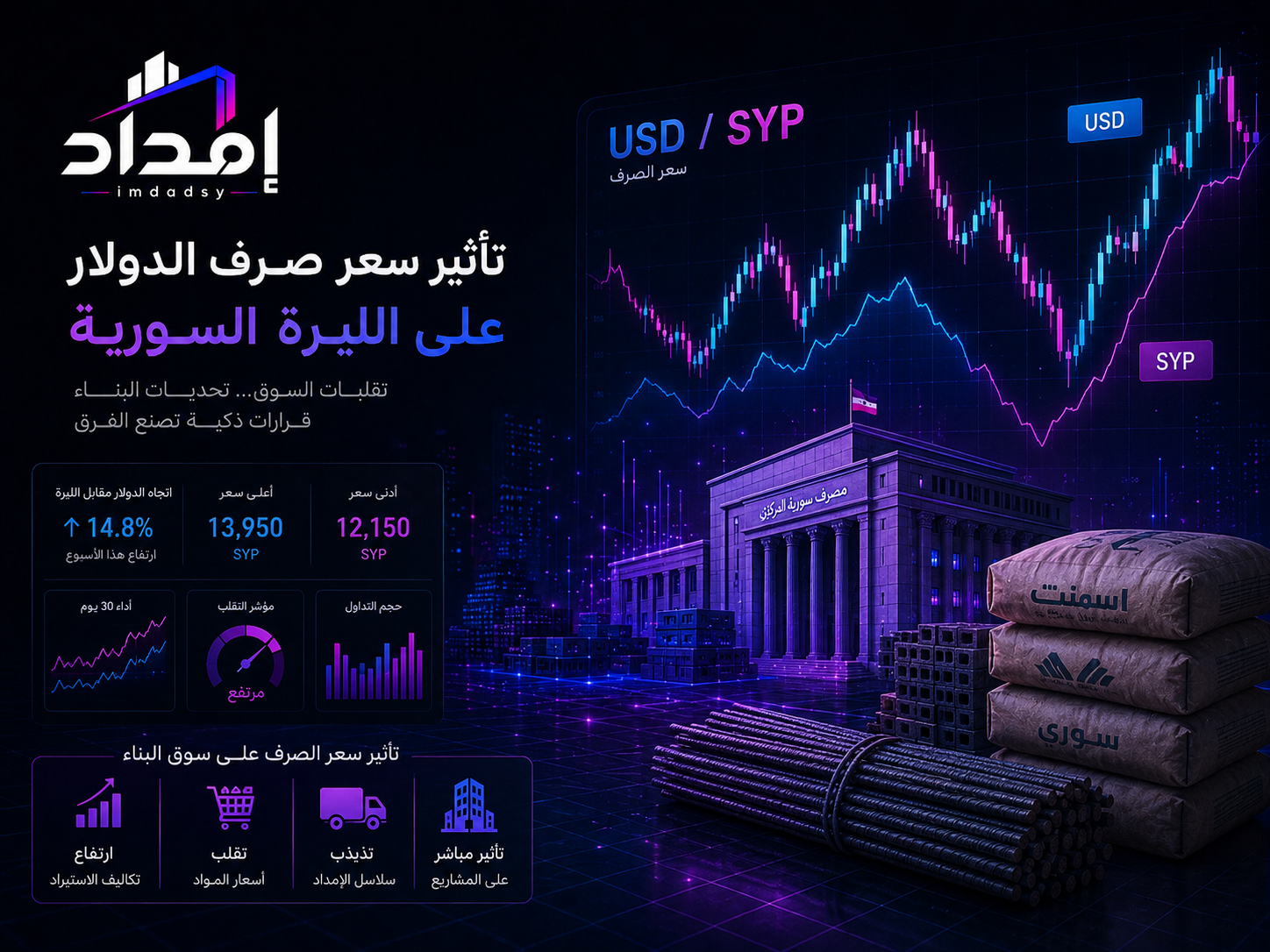
The key question in the Syrian market today is: where is the dollar heading? This question matters not only to currency traders, but also to contractors, construction material suppliers, project owners, engineering offices, and businesses that rely on imported goods or dollar-based pricing.
Current indicators suggest that the dollar is moving within a sensitive range, while the Syrian pound is trying to maintain balance after years of depreciation and volatility. Although there are positive signs, including partial easing of financial restrictions, renewed focus on formal remittance channels, and monetary reform plans, these signals have not yet fully translated into large and stable financial inflows.
The expected direction can be summarized through three main scenarios.
The first is the optimistic scenario. In this case, the Syrian pound could gradually improve if official banking channels expand, remittances increasingly move through formal systems, and real investment projects begin in sectors such as energy, telecommunications, construction, and infrastructure. Under this scenario, the dollar could decline moderately or stabilize below current levels, easing some price pressures in the market.
The second scenario, which appears to be the most likely for now, is continued volatility. In this case, the dollar remains close to current levels, with periodic increases and declines. The market is receiving positive signals, but it is still waiting for tangible results. This means companies should price with a safety margin and avoid assuming full exchange-rate stability in the near term.
The third scenario is renewed pressure on the Syrian pound. This could happen if reforms are delayed, confidence weakens, demand for dollars rises to finance imports, or security and regional risks increase. In this scenario, the dollar could move higher, raising the cost of imported materials and affecting construction, supply chains, and real estate projects.
For the reconstruction and construction market, the exchange rate is not just a financial indicator. It directly affects the cost of cement, steel, electrical equipment, energy, transportation, machinery, and imported materials. Companies operating in Syria's construction sector need to monitor the exchange rate daily, define clear validity periods for price offers, and include risk margins in long-term contracts.
The conclusion is that the dollar in Syria may not move in one sharp direction in the near term. Instead, it is likely to remain volatile and highly sensitive to economic news and financial inflows. Real improvement in the Syrian pound will not come only from market control, but from higher production, stronger exports, real investment inflows, and broader official channels for remittances and trade.
For Imdad, this issue remains central because it directly affects project costs, company behavior, and supplier pricing. The more transparent and stable the exchange-rate environment becomes, the stronger the business climate will be for planning and growth